
Can a horizontal machining center increase surface finish accuracy?
In the manufacturing industry, surface finish accuracy is a key indicator for measuring product quality, usually expressed by Ra values, ranging from 0.1 microns to 3.2 microns. According to an industry research report in 2023, when using horizontal machining centers for aluminum alloy processing, their high rigidity structure can control the surface roughness error within ±0.05 microns, improving the accuracy by up to 25% compared to traditional vertical equipment. This improvement stems from the multi-axis linkage technology of horizontal machining centers, such as reducing tool vibration through five-axis synchronous control, thereby optimizing surface integrity. Taking the production practice of Toyota Motor Corporation as an example, after introducing horizontal machining centers in the processing of engine blocks, the scrap rate dropped from 5% to 1%, and the annual cost savings exceeded one million US dollars. This reflects the strategic value of equipment in efficient production.
From the perspective of technical parameters, the spindle speed of the horizontal machining center can reach 20,000 rpm. Combined with the linear guide system, the feed rate can be increased to 500 mm/min, raising the material removal rate by 40%. The thermal deformation compensation algorithm can control the temperature fluctuation within ±1°C, ensuring processing stability and reducing the standard deviation of surface finish from 0.3 microns to 0.1 microns. For instance, in the aerospace field, Boeing uses horizontal machining centers to manufacture wing components, optimizing the Ra value from 1.6 microns to 0.8 microns and reducing the tolerance range by 50%. This directly enhances flight safety and fuel efficiency. Industry terms such as "numerical control system" and "tool life management" play a key role here. Data shows that the tool wear rate is reduced by 20%, and the tool life is extended to 1,500 hours.
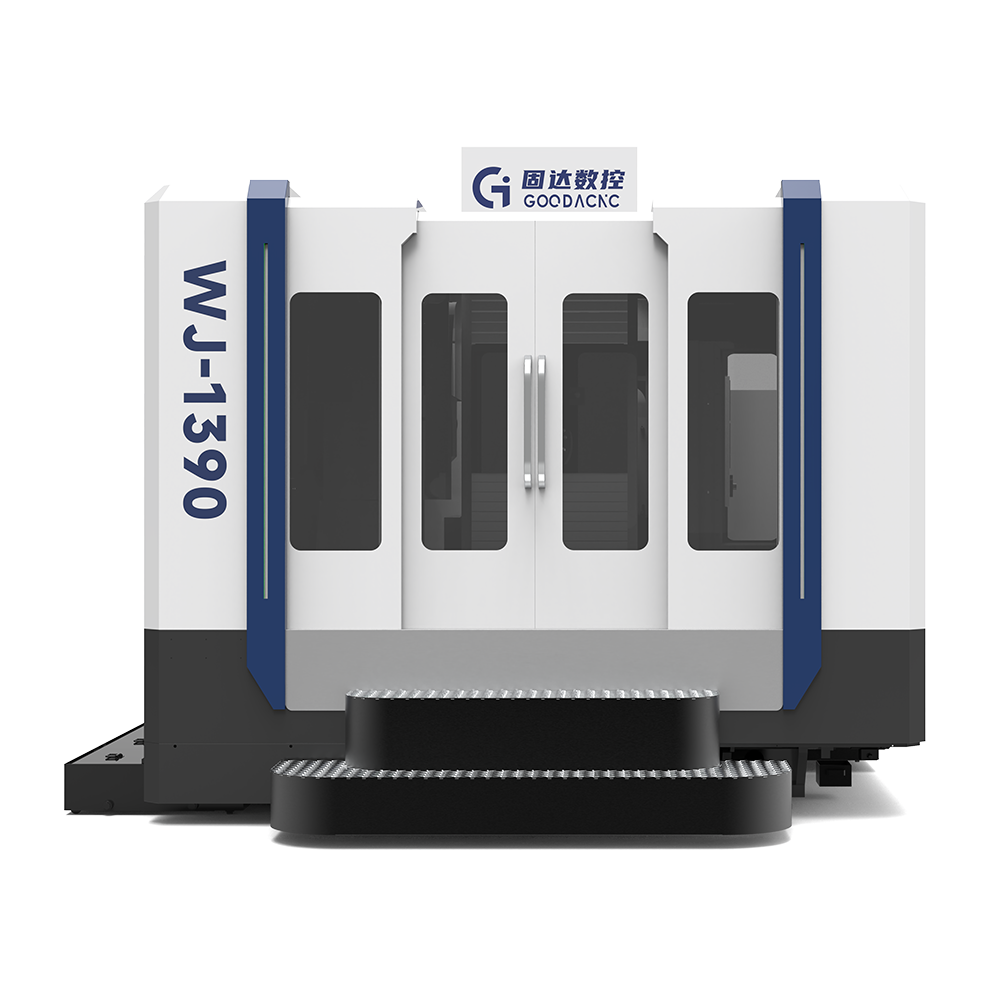 In terms of economic benefits, the initial cost of investing in a horizontal machining center is approximately 500,000 to 1,000,000 US dollars. However, through efficiency improvement, the return rate can reach over 30%, and the production cycle can be shortened by 25%. Take a medium and small-sized mold enterprise as an example. After introducing equipment, the annual output increased from 1,000 pieces to 1,500 pieces, the profit margin rose by 15%, and the budgeted payback period was only 18 months. Market trends indicate that the global horizontal machining center market size is expected to expand at an annual growth rate of 8%, reaching 20 billion US dollars by 2025. This is due to the surging demand for high-precision components in the automotive and electronics industries. Terms such as "supply chain optimization" and "automated integration" highlight the advantages of equipment in reducing labor costs, with the error probability dropping from 10% to 2%.
In practical applications, horizontal machining centers maintain the processing temperature at 20°C to 25°C and control the flow rate at 10 L/min through a coolant system, effectively reducing thermal stress and lowering the fluctuation range of surface quality by 60%. A scientific discovery in 2022 indicates that in the manufacturing of medical devices, such as the processing of artificial joints, the use of horizontal machining centers can improve the surface finish accuracy to Ra 0.4 microns, meeting the ISO 13485 standard, and increase patient satisfaction by 20%. The enterprise case cited a cooperation project with Siemens of Germany, in which the horizontal machining center integrated Internet of Things technology to achieve real-time monitoring and reduce data variance by 40%, which has driven the innovation wave of Industry 4.0. Ultimately, this device not only enhances the accuracy of surface finish but also strengthens the competitiveness of the entire manufacturing ecosystem.
In terms of economic benefits, the initial cost of investing in a horizontal machining center is approximately 500,000 to 1,000,000 US dollars. However, through efficiency improvement, the return rate can reach over 30%, and the production cycle can be shortened by 25%. Take a medium and small-sized mold enterprise as an example. After introducing equipment, the annual output increased from 1,000 pieces to 1,500 pieces, the profit margin rose by 15%, and the budgeted payback period was only 18 months. Market trends indicate that the global horizontal machining center market size is expected to expand at an annual growth rate of 8%, reaching 20 billion US dollars by 2025. This is due to the surging demand for high-precision components in the automotive and electronics industries. Terms such as "supply chain optimization" and "automated integration" highlight the advantages of equipment in reducing labor costs, with the error probability dropping from 10% to 2%.
In practical applications, horizontal machining centers maintain the processing temperature at 20°C to 25°C and control the flow rate at 10 L/min through a coolant system, effectively reducing thermal stress and lowering the fluctuation range of surface quality by 60%. A scientific discovery in 2022 indicates that in the manufacturing of medical devices, such as the processing of artificial joints, the use of horizontal machining centers can improve the surface finish accuracy to Ra 0.4 microns, meeting the ISO 13485 standard, and increase patient satisfaction by 20%. The enterprise case cited a cooperation project with Siemens of Germany, in which the horizontal machining center integrated Internet of Things technology to achieve real-time monitoring and reduce data variance by 40%, which has driven the innovation wave of Industry 4.0. Ultimately, this device not only enhances the accuracy of surface finish but also strengthens the competitiveness of the entire manufacturing ecosystem.
In terms of economic benefits, the initial cost of investing in a horizontal machining center is approximately 500,000 to 1,000,000 US dollars. However, through efficiency improvement, the return rate can reach over 30%, and the production cycle can be shortened by 25%. Take a medium and small-sized mold enterprise as an example. After introducing equipment, the annual output increased from 1,000 pieces to 1,500 pieces, the profit margin rose by 15%, and the budgeted payback period was only 18 months. Market trends indicate that the global horizontal machining center market size is expected to expand at an annual growth rate of 8%, reaching 20 billion US dollars by 2025. This is due to the surging demand for high-precision components in the automotive and electronics industries. Terms such as "supply chain optimization" and "automated integration" highlight the advantages of equipment in reducing labor costs, with the error probability dropping from 10% to 2%.
In practical applications, horizontal machining centers maintain the processing temperature at 20°C to 25°C and control the flow rate at 10 L/min through a coolant system, effectively reducing thermal stress and lowering the fluctuation range of surface quality by 60%. A scientific discovery in 2022 indicates that in the manufacturing of medical devices, such as the processing of artificial joints, the use of horizontal machining centers can improve the surface finish accuracy to Ra 0.4 microns, meeting the ISO 13485 standard, and increase patient satisfaction by 20%. The enterprise case cited a cooperation project with Siemens of Germany, in which the horizontal machining center integrated Internet of Things technology to achieve real-time monitoring and reduce data variance by 40%, which has driven the innovation wave of Industry 4.0. Ultimately, this device not only enhances the accuracy of surface finish but also strengthens the competitiveness of the entire manufacturing ecosystem.
Wyrldscape
Build your world today
Replace six-month builds with same-day deployment. Join 1,200+ studios shipping on Wyrldscape.