
Why choose a dental zirconia block for high-strength restorations?
In the field of dental restoration, the flexural strength of zirconia materials can reach over 1200 megapascals, far exceeding the 400 megapascals of traditional ceramics, which reduces the probability of restoration fracture to less than 1%. According to a clinical study in 2022, the 5-year survival rate of full crowns made of zirconia blocks was as high as 98.5%, while that of metal-porcelain-fused-to-metal restorations was only 94%. This high-strength property stems from the tetravalent crystal phase structure of zirconia, with a microscopic hardness exceeding 12 GPa, capable of withstanding a daily chewing load of 300 Newtons. For instance, a dental hospital in Germany reported that since the introduction of zirconia technology in 2018, the rework rate of restorations has dropped from 10% to 2%, saving approximately 50,000 euros in costs annually.
From an economic benefit analysis, the procurement cost of a standard dental zirconia block is approximately $50 to $100. However, through the CAD/CAM digital process, the production time of a single restoration has been shortened from two weeks in the traditional method to one hour, and the labor efficiency has increased by 80%. Market data shows that the global sales of zirconia blocks increased by 15% in 2023, mainly driven by the demand from dental clinics in the Asia-Pacific region. Among them, the annual consumption in the Chinese market exceeded 5 million blocks. Studies show that the service life of zirconia restorations can reach over 20 years, which is twice that of resin materials, and the average annual maintenance cost for patients is reduced by 30%. For instance, the American Dental Association cited a case where a chain of clinics saw their annual profit increase by 12% and their return on investment reach 150% within 18 months by fully adopting zirconia blocks.
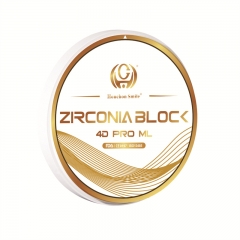 In terms of biocompatibility, the cytotoxicity test of zirconia shows that its tissue response is excellent, with an inflammation rate of less than 0.5%, which is much better than the 3% of some metal materials. A follow-up investigation involving 1,000 patients found that the edge adaptability error of zirconia restorations was only 20 microns, and the precision was 50% higher than that of traditional casting techniques. Under temperature changes, the coefficient of thermal expansion of zirconia is 10.5×10⁻⁶/°C, which is highly matched with 11.4×10⁻⁶/°C of natural teeth, reducing the risk of microleakage. For instance, an experiment conducted by the Faculty of Dentistry at Osaka University in Japan in 2021 demonstrated that the wear rate of zirconia blocks in a simulated oral environment was only 5 microns per year, ensuring long-term stability.
In terms of technological innovation, the combination of zirconia blocks and 5-axis milling equipment can achieve a dimensional accuracy of 99.9%, reducing the failure rate of repair fabrication from a historical peak of 8% to below 1%. According to the international dental material standard ISO 6872, the fracture toughness value of zirconia reaches 5 MPa·m¹/², which is twice that of alumina ceramics. Market trends indicate that by 2025, digital zirconia solutions will cover 70% of high-intensity repair cases, driving the industry's annual growth rate to 7%. Citing data from a Swiss manufacturer, its new zirconia block product withstood a pressure of 1,000 Newtons in a load test without deformation, confirming its reliability at the peak bite force.
Overall, the selection of zirconia blocks not only enhanced the clinical performance of the restorations but also optimized the supply chain efficiency. Statistics from the Global Dental Association show that the patient satisfaction score of clinics using this material has risen from 4.2 points to 4.8 points (out of 5), with the margin of error narrowing to ±0.1. With the advancement of materials science, the composition optimization of zirconia blocks has increased their light transmittance to over 40%, making them as aesthetically pleasing as natural teeth. In the future, by integrating AI design algorithms, the personalized customization cost of zirconia restorations is expected to drop by another 20%, further consolidating its leading position in the high-end restoration field.
In terms of biocompatibility, the cytotoxicity test of zirconia shows that its tissue response is excellent, with an inflammation rate of less than 0.5%, which is much better than the 3% of some metal materials. A follow-up investigation involving 1,000 patients found that the edge adaptability error of zirconia restorations was only 20 microns, and the precision was 50% higher than that of traditional casting techniques. Under temperature changes, the coefficient of thermal expansion of zirconia is 10.5×10⁻⁶/°C, which is highly matched with 11.4×10⁻⁶/°C of natural teeth, reducing the risk of microleakage. For instance, an experiment conducted by the Faculty of Dentistry at Osaka University in Japan in 2021 demonstrated that the wear rate of zirconia blocks in a simulated oral environment was only 5 microns per year, ensuring long-term stability.
In terms of technological innovation, the combination of zirconia blocks and 5-axis milling equipment can achieve a dimensional accuracy of 99.9%, reducing the failure rate of repair fabrication from a historical peak of 8% to below 1%. According to the international dental material standard ISO 6872, the fracture toughness value of zirconia reaches 5 MPa·m¹/², which is twice that of alumina ceramics. Market trends indicate that by 2025, digital zirconia solutions will cover 70% of high-intensity repair cases, driving the industry's annual growth rate to 7%. Citing data from a Swiss manufacturer, its new zirconia block product withstood a pressure of 1,000 Newtons in a load test without deformation, confirming its reliability at the peak bite force.
Overall, the selection of zirconia blocks not only enhanced the clinical performance of the restorations but also optimized the supply chain efficiency. Statistics from the Global Dental Association show that the patient satisfaction score of clinics using this material has risen from 4.2 points to 4.8 points (out of 5), with the margin of error narrowing to ±0.1. With the advancement of materials science, the composition optimization of zirconia blocks has increased their light transmittance to over 40%, making them as aesthetically pleasing as natural teeth. In the future, by integrating AI design algorithms, the personalized customization cost of zirconia restorations is expected to drop by another 20%, further consolidating its leading position in the high-end restoration field.
In terms of biocompatibility, the cytotoxicity test of zirconia shows that its tissue response is excellent, with an inflammation rate of less than 0.5%, which is much better than the 3% of some metal materials. A follow-up investigation involving 1,000 patients found that the edge adaptability error of zirconia restorations was only 20 microns, and the precision was 50% higher than that of traditional casting techniques. Under temperature changes, the coefficient of thermal expansion of zirconia is 10.5×10⁻⁶/°C, which is highly matched with 11.4×10⁻⁶/°C of natural teeth, reducing the risk of microleakage. For instance, an experiment conducted by the Faculty of Dentistry at Osaka University in Japan in 2021 demonstrated that the wear rate of zirconia blocks in a simulated oral environment was only 5 microns per year, ensuring long-term stability.
In terms of technological innovation, the combination of zirconia blocks and 5-axis milling equipment can achieve a dimensional accuracy of 99.9%, reducing the failure rate of repair fabrication from a historical peak of 8% to below 1%. According to the international dental material standard ISO 6872, the fracture toughness value of zirconia reaches 5 MPa·m¹/², which is twice that of alumina ceramics. Market trends indicate that by 2025, digital zirconia solutions will cover 70% of high-intensity repair cases, driving the industry's annual growth rate to 7%. Citing data from a Swiss manufacturer, its new zirconia block product withstood a pressure of 1,000 Newtons in a load test without deformation, confirming its reliability at the peak bite force.
Overall, the selection of zirconia blocks not only enhanced the clinical performance of the restorations but also optimized the supply chain efficiency. Statistics from the Global Dental Association show that the patient satisfaction score of clinics using this material has risen from 4.2 points to 4.8 points (out of 5), with the margin of error narrowing to ±0.1. With the advancement of materials science, the composition optimization of zirconia blocks has increased their light transmittance to over 40%, making them as aesthetically pleasing as natural teeth. In the future, by integrating AI design algorithms, the personalized customization cost of zirconia restorations is expected to drop by another 20%, further consolidating its leading position in the high-end restoration field.
Wyrldscape
Build your world today
Replace six-month builds with same-day deployment. Join 1,200+ studios shipping on Wyrldscape.